Get complete visibility of your holdings - underlying funds, portfolio companies, sectors, stages, geographies, capital movement, returns and more.
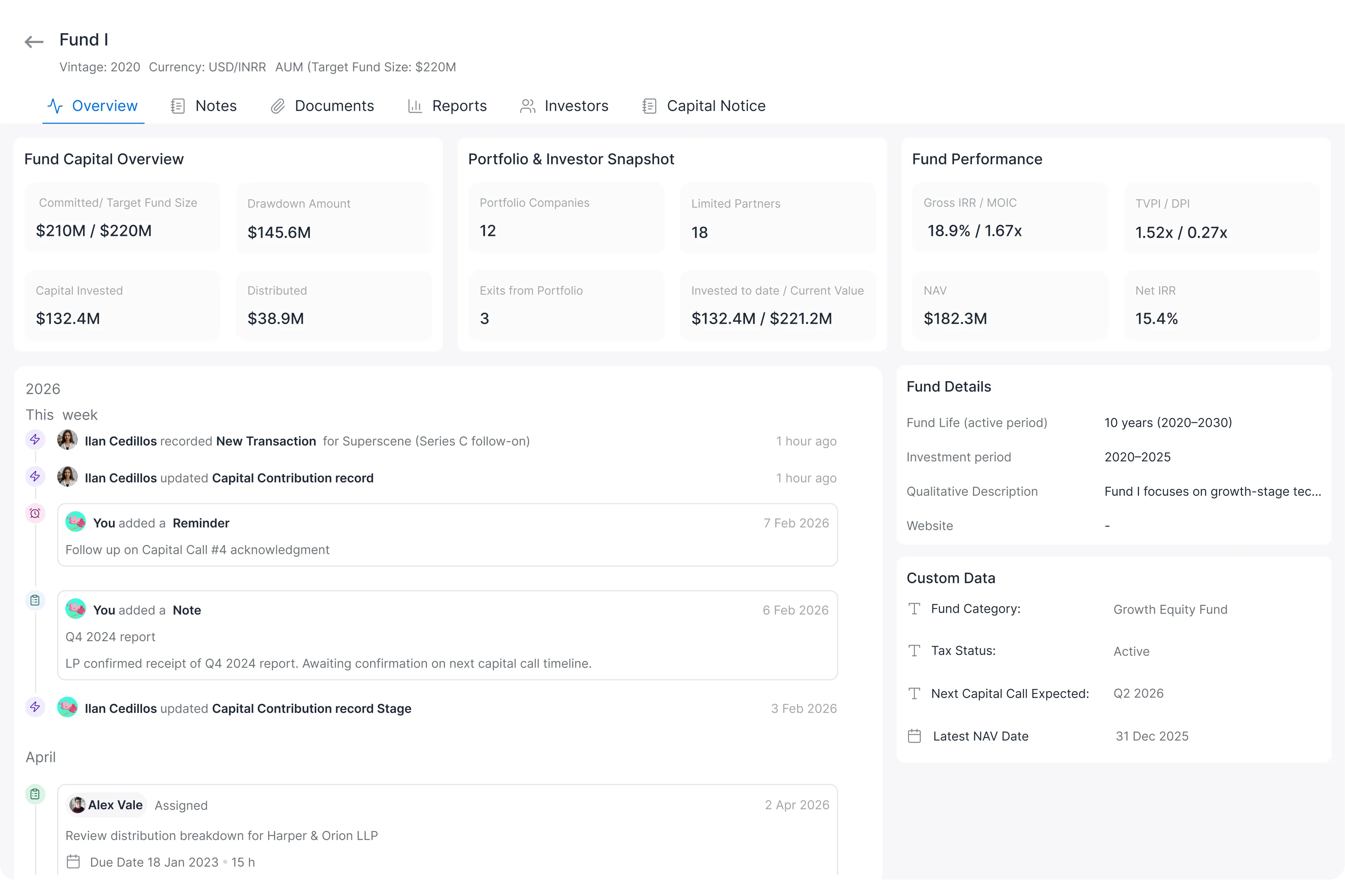
In a Fund of Funds structure, the challenge is not only tracking fund investments, it is understanding what sits beneath them. Taghash connects underlying funds, holdings, exposure, capital activity, and performance data so your team can see how capital is allocated, moving, and performing across the portfolio.
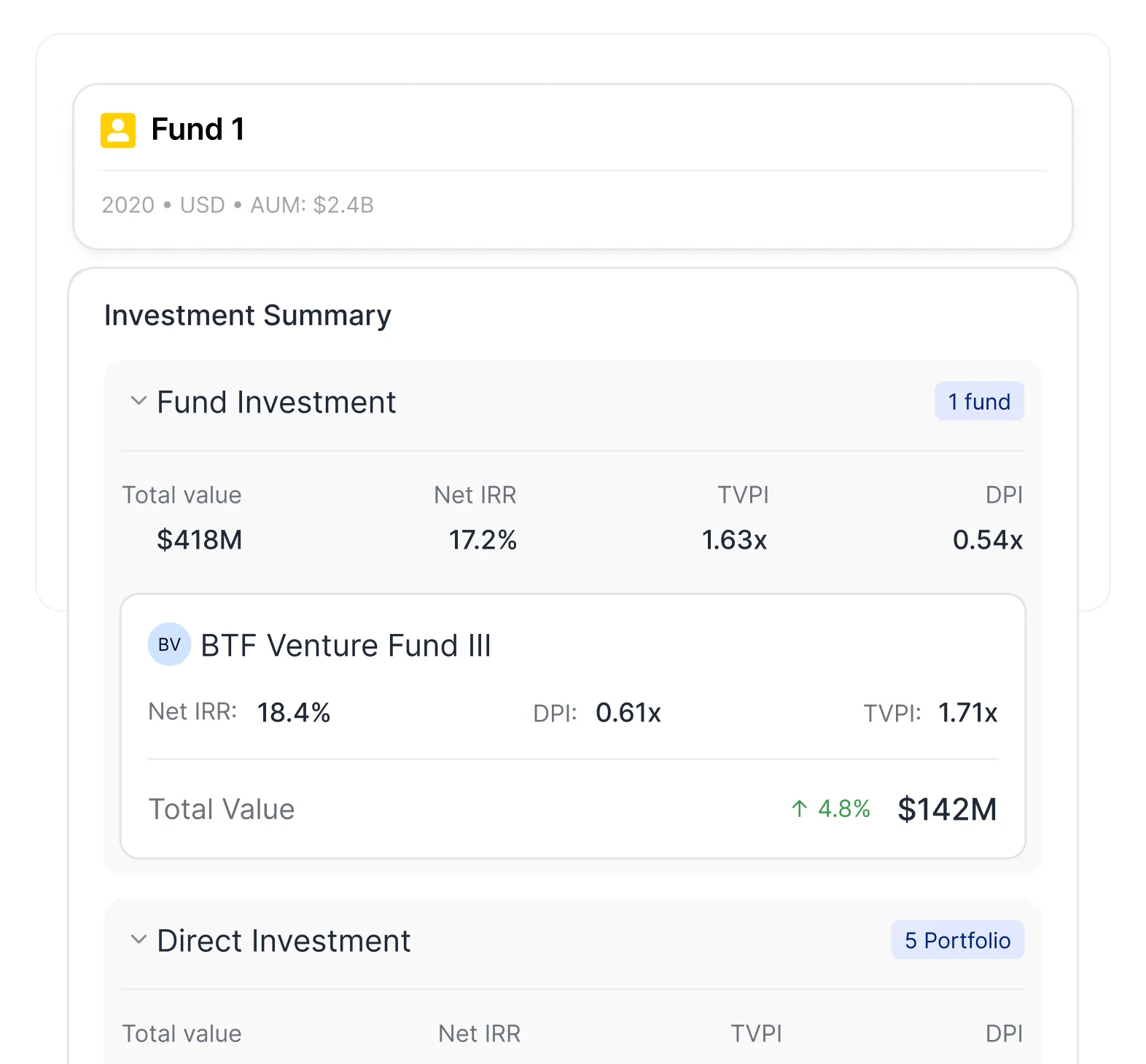
Analyze holdings data across underlying funds, direct investments, and indirect portfolio companies. Understand allocation, concentration, valuation movement, and portfolio composition with a connected view of your Fund of Funds structure.
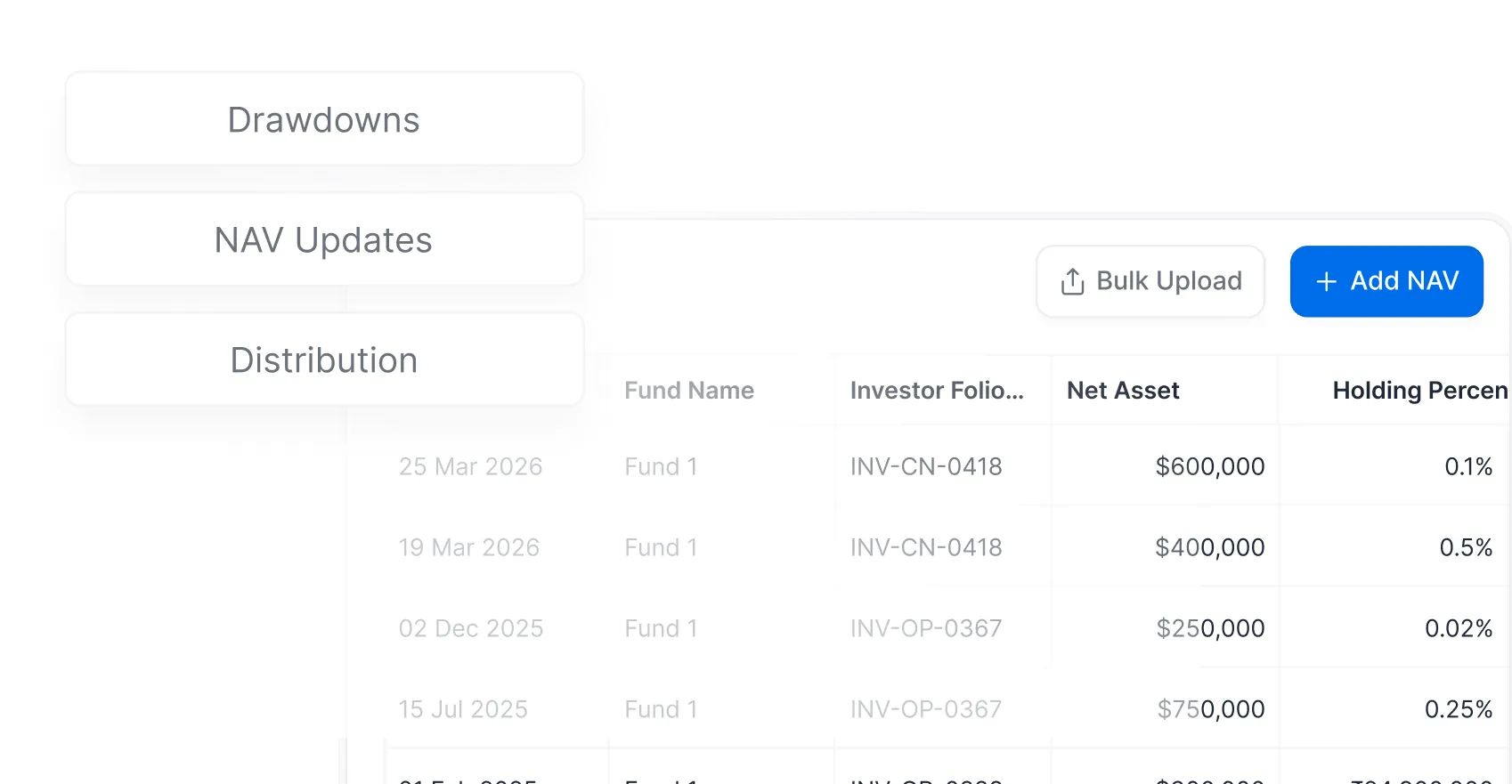
Monitor NAV, returns, distributions, valuation changes, and capital movement across underlying funds and portfolio layers. Review performance trends and generate reports for internal reviews, allocation decisions, and investor updates.
Map exposure across funds, schemes, sectors, stages, geographies, managers, and portfolio companies. See where capital is deployed, where concentration is building, and how exposure is distributed across the portfolio.
See how Taghash supports Fund of Funds workflows.
Book a demoStill have questions? Get connected to our support team.
Taghash is a leading software platform for private capital teams to manage the full fund lifecycle. From dealflow and relationship intelligence to portfolio management, fund operations, LP reporting and compliance work, Taghash brings critical workflows, documents, data and context into one connected operating layer.
Most teams can get started on Taghash within 5 days. Onboarding timelines depend on your fund structure, data migration needs, workflow complexity, integrations and customization requirements.
Yes. Taghash can be easily configured around your fund’s workflows, team structure and operating model. For more specific requirements, the Taghash team is also open to custom development where it fits the fund’s use case.
Yes. Migrating data to Taghash is usually straightforward. If your data is complex or spread across spreadsheets, CRMs or other legacy systems, our data support team works with you during onboarding to organize and migrate key records such as deals, contacts, portfolio companies, LPs, fund data, documents and workflow history.
Yes. Many Taghash customers are SEBI-registered AIFs. Taghash supports Category I and Category II AIF teams across the entire fund lifecycle.
Yes. Taghash supports role-based access controls, so your team can define who can view, edit, approve or manage specific data and workflows. Access can be configured across workspace, teams, funds, deals, portfolio companies, LP records, reports, etc. - helping each user work with the context they need while keeping sensitive information restricted.
Yes. Taghash is built to protect sensitive data. Taghash is SOC 2 compliant, supported by regular VAPT reviews and ongoing monitoring. It is also designed to help SEBI-regulated fund teams align with CSCRF security and governance requirements.
Taghash is typically introduced through a guided demo, tailored to your fund’s workflows and operating requirements. Trial access may be given depending on your use case. Email contact@taghash.io to learn more.
Yes. Taghash is primarily a software platform for private capital teams, with access to vetted service providers for legal, accounting and compliance-related workflows. These providers work alongside the platform, helping your team reduce back and forth while keeping service-led workflows, documents and context connected within Taghash.
View all
Early-stage portfolio management gets harder when updates, MIS, ownership, valuations, documents and reporting inputs are scattered across emails, spreadsheets and shared drives. This blog covers how VC teams can improve visibility, spot risks earlier and run cleaner portfolio reviews.
AI can help VC teams only when it works with the right fund context and stays under control. This blog explains how Taghash MCP connects AI to fund workflows while keeping access permissioned, governed and easier to review across deal flow, portfolio, LP, fund and reporting work.
Quarterly investor reporting slows down when portfolio data, fund records, accounting inputs and commentary are managed across disconnected workflows. This blog explains how connected reporting readiness helps VC fund teams reduce manual compilation and prepare LP summaries faster.